

Lube Oil Analysis merupakan kebutuhan penting bagi industri minyak dan gas di Indonesia. Artikel ini membahas pengertian, delapan parameter uji dan arti angkanya, frekuensi sampling per jenis mesin, cara mengambil sampel yang benar, serta manfaatnya untuk predictive maintenance. PT DnD Java Indonesia sebagai laboratorium migas di Bojonegoro menjalankan pengujian tersebut mengikuti standar internasional dengan pelaporan yang tepat waktu.
In the industrial world, especially in sectors involving the use of heavy machinery and equipment, regular maintenance is a crucial element in maintaining the performance and longevity of the machine. One of the increasingly popular predictive maintenance methods is Lube Oil Analysis or lubricating oil analysis. This article will discuss in full the meaning of Lube Oil Analysis and the various benefits that can be obtained from its application.
What is Lube Oil Analysis?
Lube Oil Analysis is a laboratory testing process on lubricating oil taken from a machine or industrial equipment to assess the condition of the lubricant and detect potential problems in the machine. The main goal is to determine the extent to which the oil quality is still good and to identify early signs of engine damage before major failure occurs.
This testing usually includes several parameters such as:
- Viscosity (thickness)
- Water content and contaminants
- Number of wear metal particles
- Additive content
- Total Acid Number (TAN) dan jumlah basa (Total Base Number/TBN)
This process is a bit like a blood test for humans: by taking an oil sample, technicians can “read” the internal health of the engine without having to disassemble or open its components.
Types of Testing in Lube Oil Analysis
Lube Oil Analysis consists of several types of tests, including:
- Physics Analysis
- Measuring viscosity, color, and odor.
- Determine whether the oil still meets specifications or has degraded.
- Chemical Analysis
- Measures water content, oxidation and additive degradation.
- Knowing additive wear and corrosion potential.
- Spectrometric Analysis
- Identifying metal elements in small quantities.
- Shows wear of components such as bearings, pistons, and gears.
- Ferrographic Analysis
- Assess the shape and size of metal particles to determine the source of wear.
- Useful for detecting early damage.
Benefits of Lube Oil Analysis
Regular application of Lube Oil Analysis can provide various significant benefits, including:
1. Increase Engine Life
By detecting contaminants or wear early, repairs or replacement of components can be taken before serious damage occurs. This directly extends the life of the machine.
2. Prevent Unexpected Downtime
Lube Oil Analysis helps identify potential failures before they cause fatal damage, preventing unexpected operational stoppages.
3. Maintenance Cost Efficiency
Condition-based maintenance supported by oil analysis enables companies to be more cost efficient, as component replacement is only carried out when necessary.
4. Ensuring Lubricant Quality
By analyzing oil quality regularly, companies can ensure that the oil used still meets standards and is suitable for use, or whether it needs to be replaced.
5. Knowing the Types and Sources of Contaminants
Contamination such as water, dust, or metal particles can accelerate engine failure. With Lube Oil Analysis, contaminants can be identified and addressed early.
6. Becoming the Basis for Machine Performance Evaluation
The trend of analysis results over time can be a reference for evaluating machine performance and making decisions regarding unit operation or replacement.
Applications in the Industrial World
Lube Oil Analysis is very commonly used in various industrial sectors such as:
- Manufacturing industry
- Mining and heavy equipment
- Electricity and power generation
- Oil and gas industry
- Transportation and logistics
Machines such as generators, turbines, compressors, gearboxes and hydraulic machines benefit greatly from the application of this technique.
When Should You Perform a Lube Oil Analysis?
Ideally, oil analysis is performed periodically according to manufacturer recommendations or based on engine operating hours. However, here are some conditions that are signs to immediately perform oil analysis:
- After replacement of critical components
- If there is an indication of abnormal operating temperature
- When a decrease in engine performance is found
- After an oil contamination or leak incident
8 Parameter Lube Oil Analysis dan Arti Angkanya
Laporan lube oil analysis biasanya memuat delapan kelompok parameter. Tabel berikut merangkum apa yang diukur, metode standarnya, dan tindakan yang lazim diambil bila angkanya bergerak. Batas peringatan yang sesungguhnya ditetapkan per mesin bersama tim pemeliharaan, karena bergantung pada jenis mesin, pelumas, dan jam operasi.
| Parameter | Metode | Bila naik / turun, artinya | Tindakan lazim |
|---|---|---|---|
| Viskositas 40 & 100 °C | ASTM D445 | Naik: oksidasi, jelaga; turun: pengenceran bahan bakar, salah grade | Periksa injektor, cek grade pelumas yang diisikan |
| Acid number (TAN) | ASTM D664 | Naik: pelumas teroksidasi, asam terbentuk | Rencanakan penggantian pelumas |
| Base number (TBN) | ASTM D2896 / D4739 | Turun: cadangan alkali habis (mesin diesel) | Ganti pelumas sebelum TBN mendekati batas |
| Water content | ASTM D6304 | Naik: kondensasi, kebocoran pendingin, air dari luar | Uji tekanan sistem pendingin, cek breather |
| Wear metals (Fe, Cu, Pb, Cr, Al) | ASTM D5185 (ICP) | Naik: komponen tertentu aus (lihat tabel sumber logam) | Inspeksi komponen yang ditunjuk logamnya |
| Kontaminan (Si, Na, K, B) | ASTM D5185 (ICP) | Si: debu masuk; Na/K/B: cairan pendingin masuk | Periksa saringan udara, gasket kepala silinder |
| Oksidasi, nitrasi, jelaga | ASTM E2412 (FTIR) | Naik: pelumas lelah atau pembakaran tidak sempurna | Perpendek interval ganti, cek pembakaran |
| Flash point | ASTM D92 / D93 | Turun tajam: bahan bakar masuk ke pelumas | Periksa injektor dan ring piston |
Logam aus menunjuk komponen tertentu
- Besi (Fe) — liner silinder, roda gigi, poros, bantalan gelinding
- Tembaga (Cu) dan timbal (Pb) — bantalan luncur, bushing, oil cooler berbahan tembaga
- Aluminium (Al) — piston, bantalan aluminium; bila bersama silikon tinggi = debu masuk
- Kromium (Cr) — ring piston, batang katup
- Natrium, kalium, boron — cairan pendingin masuk ke pelumas
Lube Oil Analysis sebagai Dasar Predictive Maintenance
Kekuatan lube oil analysis bukan pada satu hasil, melainkan pada tren. Angka besi 60 ppm tidak berarti apa-apa sampai dibandingkan dengan 20 ppm tiga bulan lalu pada mesin yang sama. Karena itu program predictive maintenance yang berhasil selalu memulai dari baseline: sampel pelumas baru dari drum yang sama diuji sebagai pembanding, lalu setiap sampel berikutnya dibaca sebagai laju perubahan.
Alur lima langkah
- Tentukan mesin dan titik sampling. Prioritaskan mesin kritis (genset, kompresor, turbin, gearbox utama) dan tetapkan satu titik sampling tetap per mesin, idealnya sebelum filter saat mesin hangat.
- Tetapkan frekuensi. Mesin diesel dan genset tiap 250–500 jam operasi; turbin, kompresor, dan hidrolik dengan pelumas umur panjang tiap 1–3 bulan; disesuaikan dengan tren.
- Ambil sampel dengan prosedur bersih. Botol bersih, pompa vakum atau kran sampling yang dibilas dulu, label berisi jam operasi mesin dan jam operasi pelumas.
- Uji dan bandingkan. Laboratorium menguji paket parameter, lalu membandingkan dengan baseline dan sampel sebelumnya, bukan hanya dengan batas umum.
- Putuskan tindakan. Lanjutkan, periksa komponen tertentu, atau ganti pelumas — dicatat di CMMS agar tren berikutnya punya konteks.
| Jenis mesin | Paket parameter yang disarankan | Frekuensi lazim |
|---|---|---|
| Mesin diesel & genset | Viskositas 100 °C, TBN, jelaga/oksidasi, water, flash point, wear metals | 250–500 jam operasi |
| Turbin gas / uap | Viskositas 40 °C, TAN, water separability, oksidasi, kebersihan partikel | 1–3 bulan |
| Kompresor | Viskositas, TAN, water, wear metals, pengenceran gas proses | 1–3 bulan |
| Gearbox & hidrolik | Viskositas, water, partikel, Fe/Cu/Si | 1–3 bulan |
| Pelumas baru / base oil | Density, viskositas & VI, flash point, pour point, color, aditif | Setiap penerimaan batch |
Cara Mengambil Sampel Oli yang Benar
Sebagian besar hasil lube oil analysis yang membingungkan berawal dari sampel, bukan dari laboratorium. Enam aturan berikut mencegahnya:
- Ambil sampel saat mesin hangat dan baru beroperasi, agar partikel dan air masih tersuspensi dan mewakili kondisi kerja.
- Gunakan titik sampling yang sama setiap kali, sebelum filter; sampel dari drain plug membawa endapan dasar yang tidak mewakili.
- Bilas selang atau kran sampling dengan pelumas yang sama sebelum botol diisi; buang bilasan pertama.
- Pakai botol bersih baru, isi 2/3, tutup segera. Hindari botol bekas dan wadah bening yang lama terpapar cahaya.
- Tulis di label: identitas mesin, jam operasi mesin, jam operasi pelumas sejak penggantian terakhir, merek dan grade pelumas.
- Kirim dalam beberapa hari; sampel yang lama tersimpan berubah kadar airnya dan mengendap.
Rekomendasi untuk Industri di Jawa Timur dan Sekitarnya
Untuk fasilitas di Surabaya, Gresik, Bojonegoro, Tuban, dan kawasan industri Jawa Timur lainnya, lube oil analysis paling efektif bila laboratoriumnya dekat: sampel sampai di hari yang sama, hasil keluar lebih cepat, dan teknisi laboratorium dapat datang untuk mengambil sampel terjadwal. Laboratorium PT DnD Java Indonesia di Bojonegoro melayani program pemantauan berkala dengan botol, label, jadwal, dan grafik tren per mesin, dan hasilnya dilaporkan dari laboratorium terakreditasi ISO/IEC 17025:2017 sehingga dapat dipakai untuk klaim garansi dan audit pemeliharaan.
Mulai program lube oil analysis untuk mesin kritis Anda
Sampaikan jenis mesin, jumlah titik, dan pelumas yang dipakai; kami susun paket parameter, jadwal sampling, dan batas peringatan awalnya. Rincian layanan ada di halaman lube oil analysis.
WhatsApp 0888-9507-534 · [email protected] · Telepon (0353) 8940000
Pertanyaan yang Sering Diajukan
Apa saja tes dasar dalam lube oil analysis?
Paket dasar mencakup viskositas, TAN atau TBN, water content, dan wear metals dengan ICP. Empat kelompok ini sudah memberi gambaran kondisi pelumas dan mesin; oksidasi (FTIR), flash point, dan hitung partikel ditambahkan sesuai jenis mesin dan masalah yang dicurigai.
Seberapa sering sampel oli harus diambil?
Mesin diesel dan genset yang beroperasi terus-menerus umumnya tiap 250 sampai 500 jam operasi. Turbin, kompresor, gearbox, dan sistem hidrolik dengan pelumas umur panjang cukup tiap satu sampai tiga bulan. Frekuensi disesuaikan lagi setelah tren beberapa sampel pertama terlihat.
Berapa lama hasil lube oil analysis keluar?
Paket pemantauan rutin umumnya selesai dalam beberapa hari kerja setelah sampel diterima. Parameter khusus seperti evaporation loss atau cold crank dijadwalkan terpisah. Untuk kebutuhan mendesak, sampaikan saat pengiriman agar diprioritaskan.
Apakah laboratorium memberi rekomendasi tindakan, bukan hanya angka?
Ya. Laporan menandai setiap parameter dengan status normal, perhatian, atau kritis berdasarkan batas yang disepakati, menyebut komponen yang diduga aus dari pola logamnya, dan menyarankan tindakan: lanjutkan, periksa komponen tertentu, atau ganti pelumas.
Bisakah lube oil analysis mendeteksi kebocoran cairan pendingin?
Bisa. Water content Karl Fischer mendeteksi airnya, sedangkan kenaikan natrium, kalium, dan boron pada hasil ICP menunjukkan bahwa air itu berasal dari cairan pendingin, bukan kondensasi. Kombinasi keduanya membedakan kebocoran pendingin dari masuknya air biasa.
Conclusion
Lube Oil Analysis is one of the best predictive maintenance methods that can be applied in various industries. With this analysis, companies can not only maintain optimal engine conditions, but also reduce operational costs and minimize the risk of major damage.
Performing regular Lube Oil Analysis is a smart investment to maintain the continuity and operational efficiency of your machine.
🔍 Want a fast, accurate, and reliable Lube Oil Analysis service?
See more information Lube Oil Analysis Services from DND Java and get the best solution for your industrial machine maintenance!
Layanan Terkait dan Referensi Standar
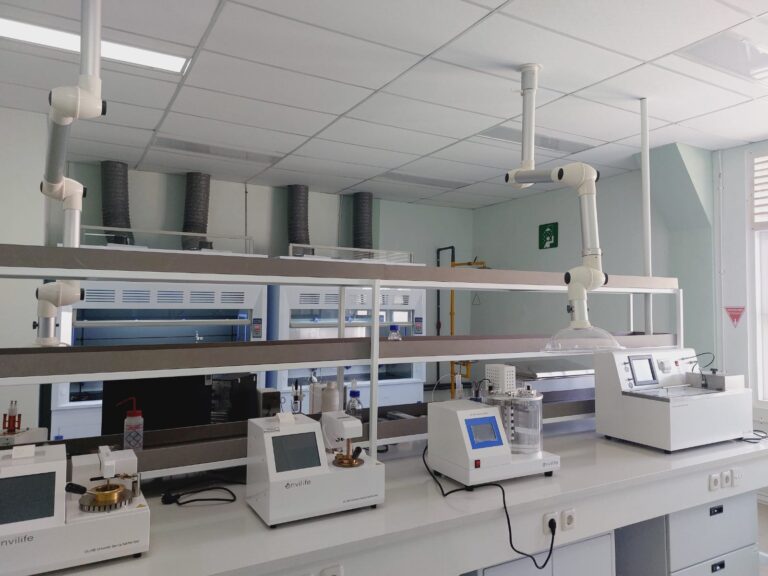
Membutuhkan pendampingan teknis untuk pengujian ini? PT DnD Java Indonesia menyediakan layanan Lube Oil Analysis dan Chemical Screening, dilengkapi pengambilan sampel di lokasi serta konsultasi kebutuhan pengujian bersama tim laboratorium kami.
Mengapa pengujian ini perlu dilakukan di laboratorium terakreditasi?
Hasil uji dipakai sebagai dasar keputusan operasional dan komersial, sehingga metode uji, kalibrasi alat, dan kompetensi analis harus tertelusur. Laboratorium kami menjalankan prosedur tersebut mengacu pada metode standar yang berlaku di industri minyak dan gas.
Rujukan standar dapat dibaca pada Kementerian ESDM dan ASTM International. Untuk diskusi teknis mengenai kebutuhan uji Anda, tim kami siap membantu.
Pertanyaan Umum seputar Pengujian Laboratorium
Bagaimana alur pengujian di laboratorium kami?
Sampel yang masuk dicatat dan diberi identitas unik, lalu diperiksa kondisinya sebelum dianalisis. Setiap tahap direkam dalam catatan mutu sehingga hasil dapat ditelusuri kembali bila diperlukan verifikasi. Analis bekerja mengikuti instruksi kerja yang telah divalidasi, dengan peralatan yang dikalibrasi berkala oleh lembaga kalibrasi yang diakui.
Berapa lama waktu pengerjaan dan seperti apa laporannya?
Waktu pengerjaan menyesuaikan jenis parameter dan jumlah sampel. Pengujian rutin umumnya selesai dalam beberapa hari kerja, sedangkan permintaan mendesak dapat dijadwalkan lebih cepat setelah dikonfirmasi. Laporan diterbitkan dalam format resmi berisi identitas sampel, metode acuan, hasil, satuan, serta catatan bila ditemukan penyimpangan kondisi sampel.
Apa yang perlu disiapkan sebelum mengirim sampel?
Pastikan wadah bersih, tertutup rapat, dan sesuai peruntukan agar mutu sampel tidak berubah selama perjalanan. Sertakan informasi asal sampel, tanggal pengambilan, dan parameter yang diminta. Bila diperlukan, tim kami dapat melakukan pengambilan sampel langsung di lokasi Anda mengikuti prosedur yang berlaku.
Baca juga: Kadar air dalam gas: dampak dan cara ujinya